Storyweavers
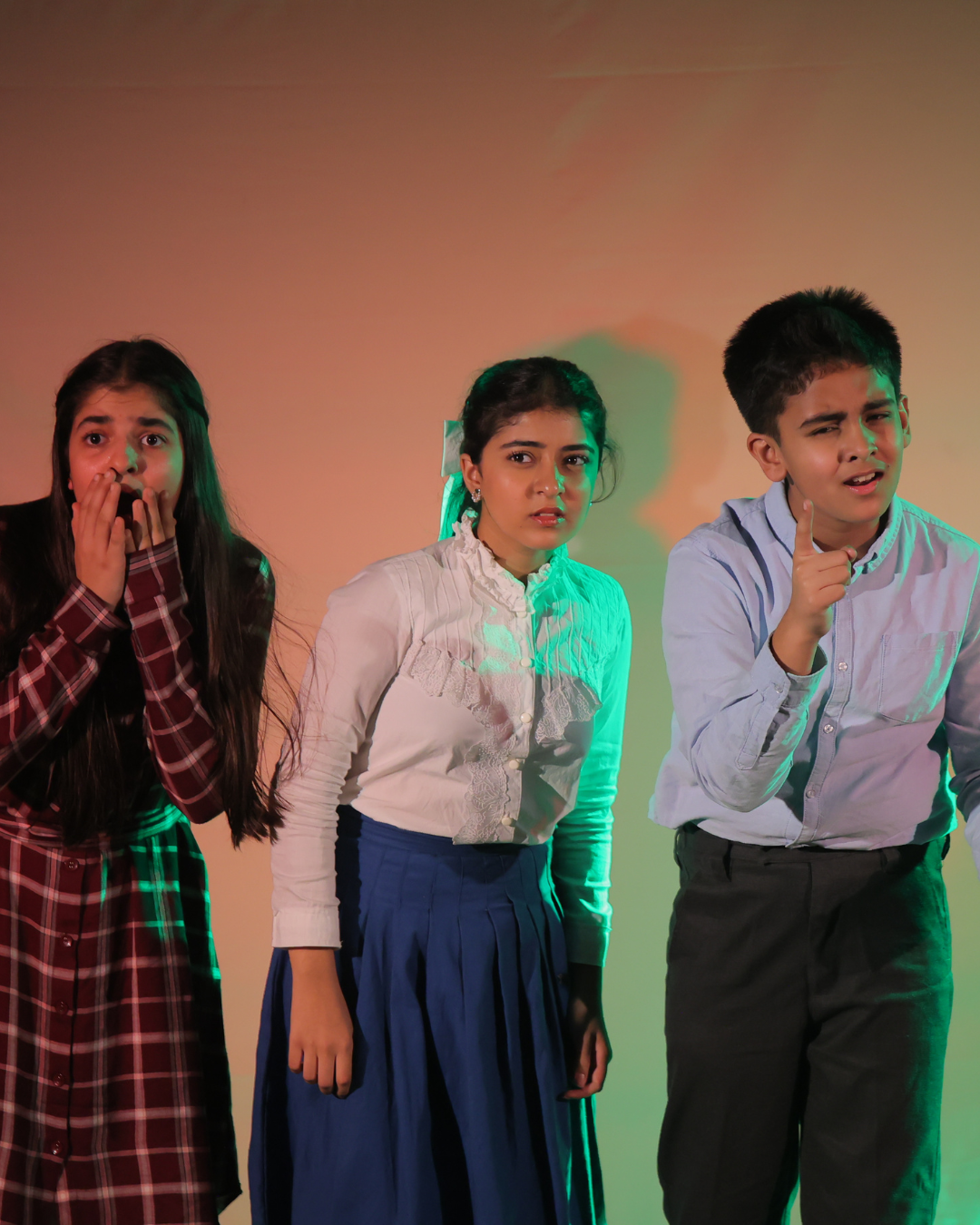
In each term during these classes, young minds go through the process of intensive improvisations, tableaus and various drama techniques to create short performances and formal stage productions.
“It is forbidden to walk on the grass. It is not forbidden to fly over the grass.”
– Augusto Boal
Creative Drama and Theatre for 9- to 13-year-olds.
In each term during these classes, young minds go through the process of intensive improvisations, tableaus and various drama techniques to create short performances and formal stage productions.
Our Programmes
Exploring Literary Genres
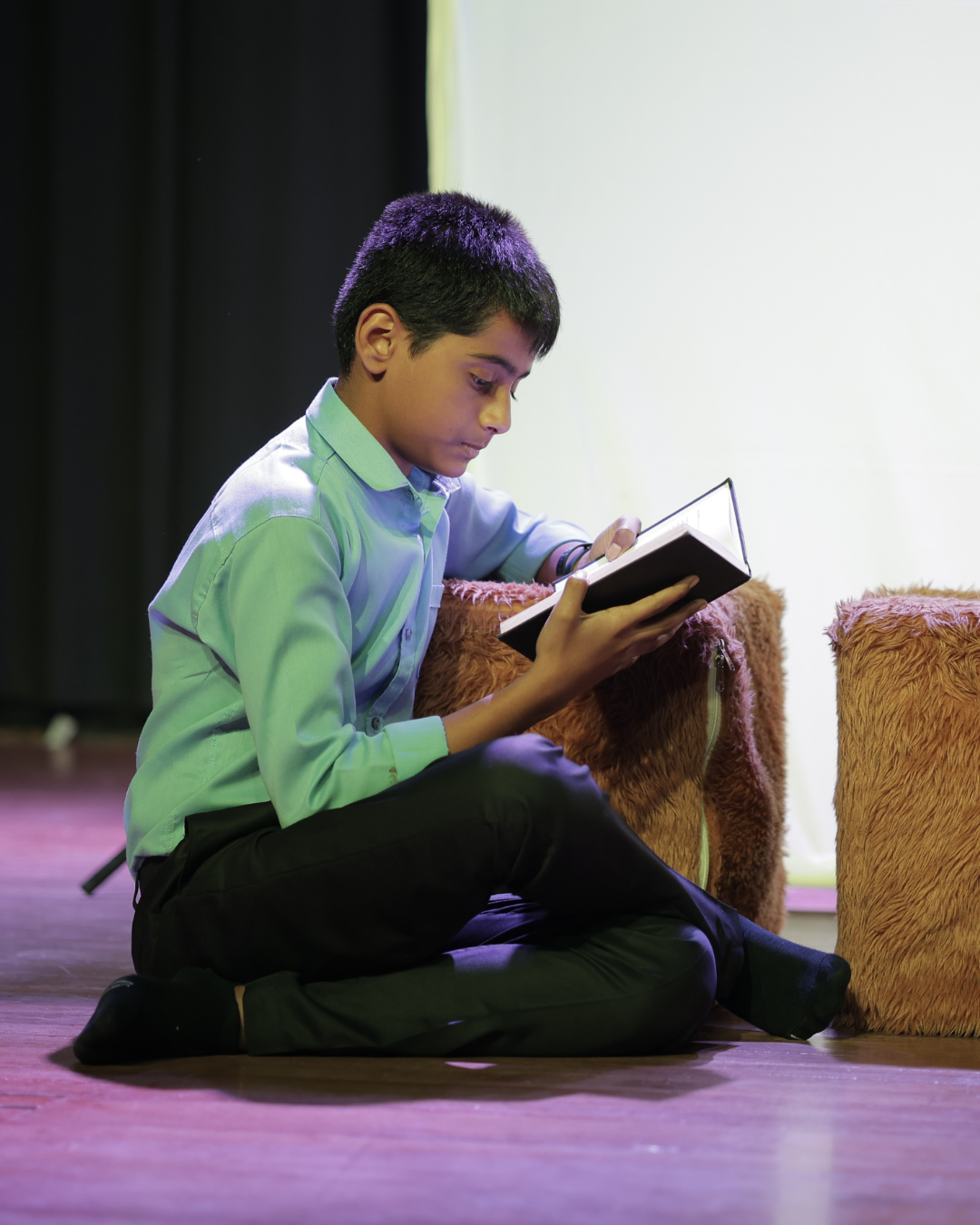
Spotlighting the direct connection between performing arts and literature, each term we explore a variety of genres like classic stories, contemporary novels, poetry, mythology, mysteries, non- fiction and more. Children are encouraged to experiment and create material using these genres, try out original ideas and new techniques combined with their real-life experiences, joys and conflicts.
Devising Performances around their lives and environment
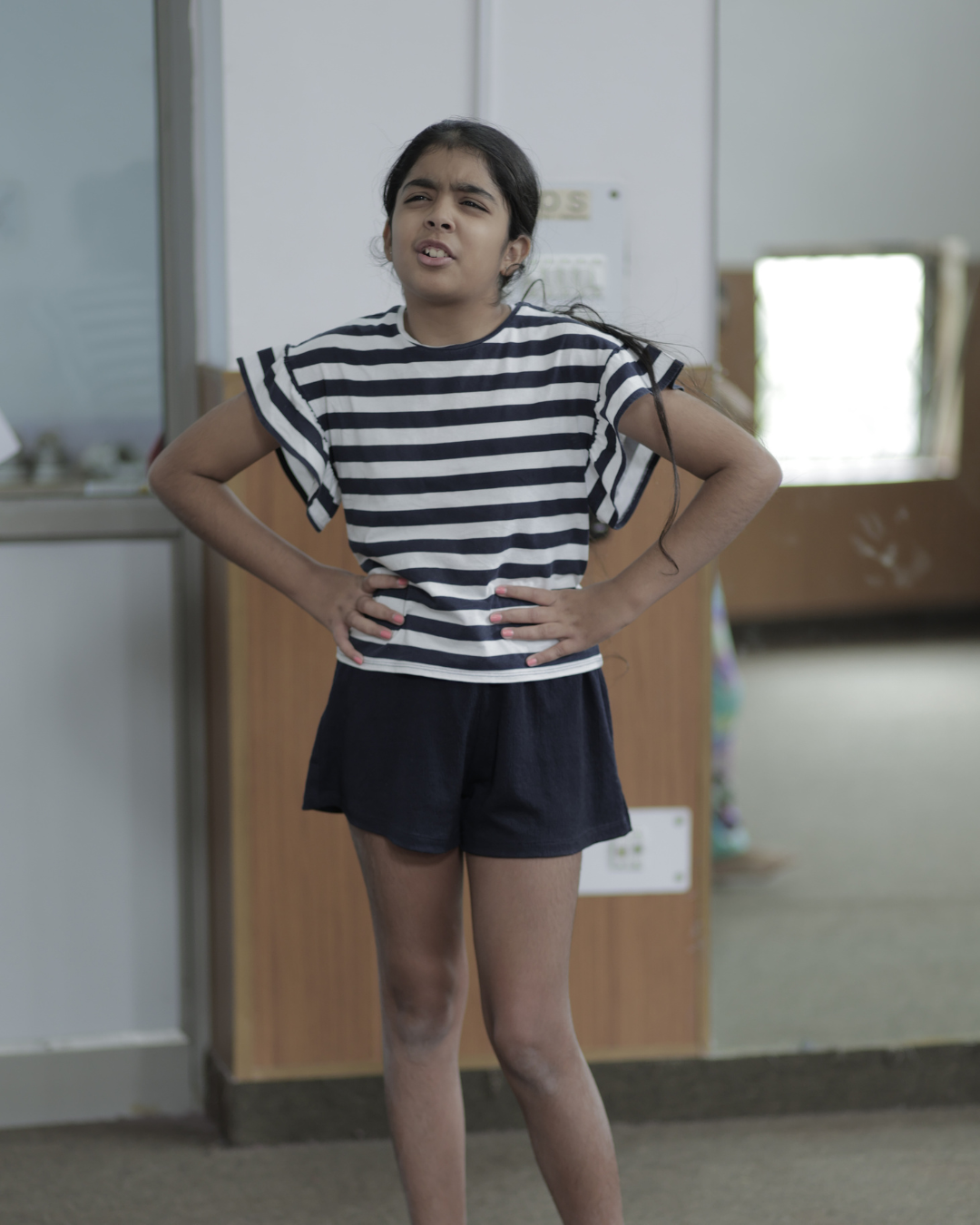
Devising stories, plots and ideas is an interesting and effective way for children to think about their lives and environment, and learn to engage with the world confidently. We take a central issue from their own lives, and through discussions, storytelling, role play, improvisation and movement, a show is produced. From this physical piece of theatre, we facilitate the creation of a script which is eventually performed or read on stage.
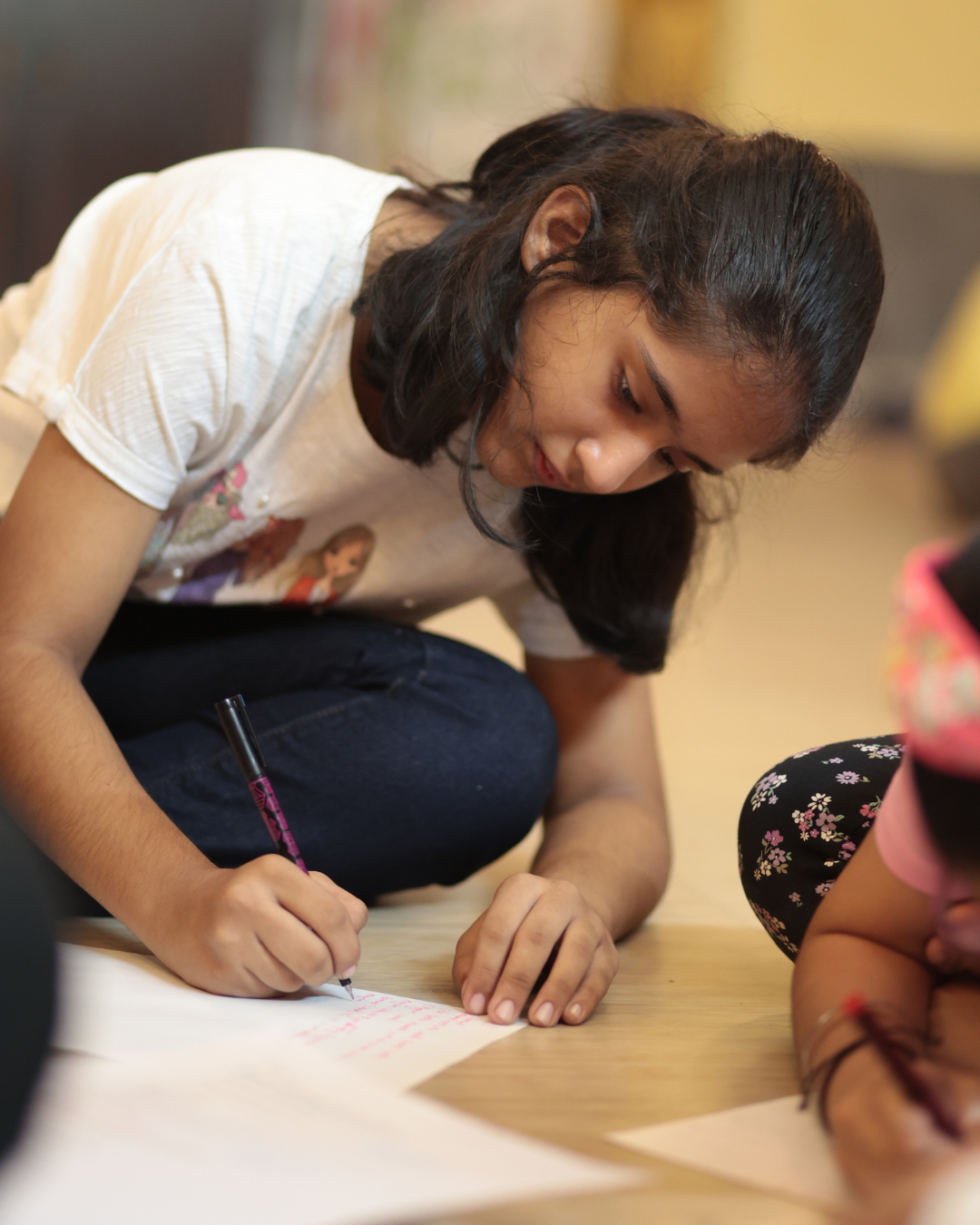
Scriptwritng and Reader’s Theatre
Whether it’s a devised performance or an adaptation of a literary text, the process of arriving at a script from a physical piece of theatre which includes improvisations and other forms of drama and theatre exercises is extremely intriguing and intensive.
Self-written scripts give them more ownership of the work they are doing.
Learners get time to engage deeply with layers of text and character, they get time to create and re-work scenes and refine their expression through the written form using relevant creative writing conventions and interplay of words.
The script is then put into a reading practice rehearsal , where children go through the process of a collective reading to further enhance their skills in voice modulation.
This culminates into Reader’s Theatre. The program draws on a diverse mix of artistic methodologies, adapting to the unique goals and focus of each term’s offerings:
- Drama Games
- Improvisations
- Fourm Theatre
- Drama Exercises like hot seating and tableuxs Music and Movement
- Scene Making
- Creative Writing
- Group Discussions Voice Modulation Puppetry